You know the feeling: you reach for your phone, grab a snack, or snap at a loved one before you even realize what you're doing. These autopilot habits run on learned neural pathways, not conscious decisions. Research shows that almost half of what we do is habitual, saving energy but often leading us astray. The problem isn't lack of willpower—it's that willpower alone rarely works. The solution lies in a different approach: a five-minute mindful pause that interrupts the habit loop at its weakest point.
What does mindfulness do to help break habits?
Select one answer.
Why Mindfulness Beats Willpower
For decades, the standard advice for breaking habits was to resist the urge, be disciplined, and try harder. But as psychiatrist and neuroscientist Judson Brewer explains, this advice is "almost entirely wrong" from a scientific perspective. His research at Brown University shows that mindfulness—not willpower—can decouple the link between craving and behavior. In one study, participants using mindfulness techniques quit smoking at twice the rate of those using the gold-standard program, and nearly all stayed quit, yielding a fivefold difference.
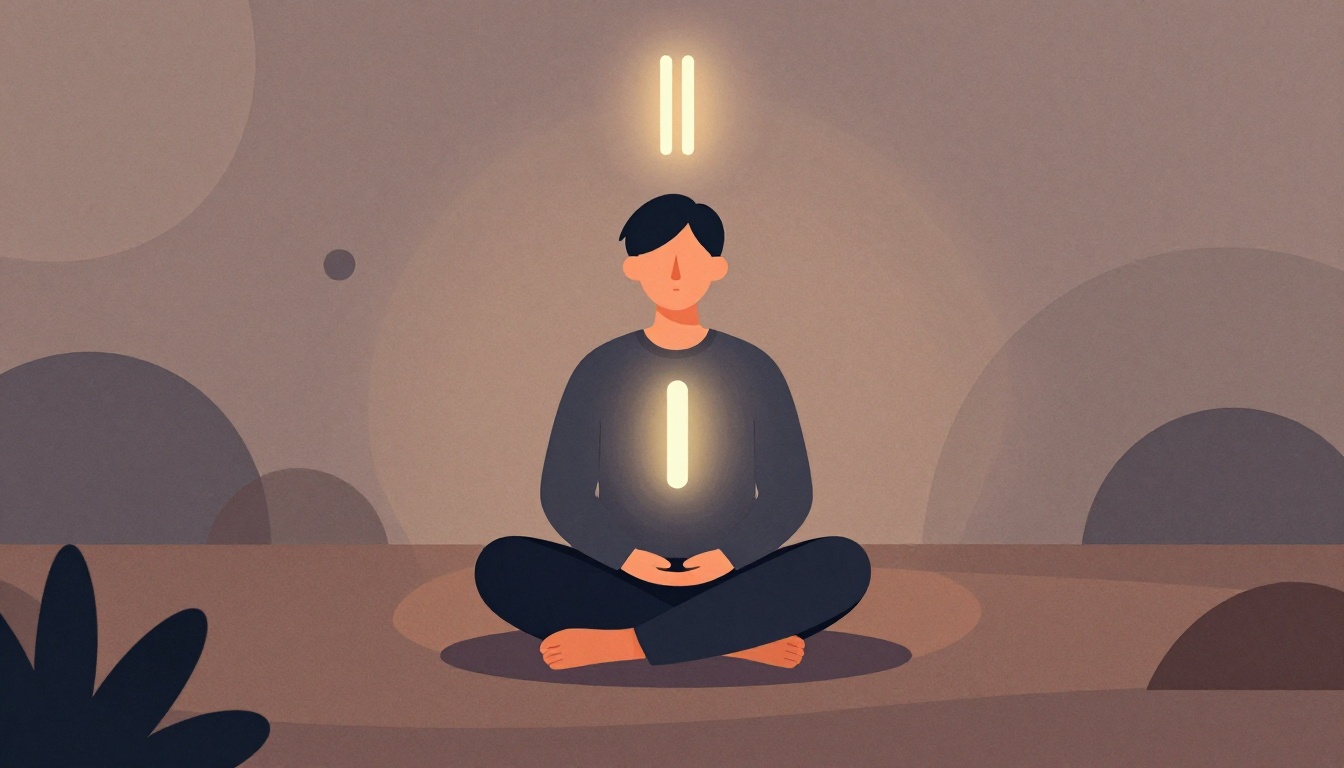
Mindfulness works because it creates a pause between impulse and action. That pause is your moment of choice. Instead of running on autopilot, you become an active observer of your own mind. You notice the trigger, the craving, and the urge without judging them—and that awareness alone weakens the habit's grip.
The Five-Minute Mindful Pause: Step-by-Step
You don't need a meditation cushion or an hour of silence. A five-minute pause can be done anywhere—at your desk, in the car, or before you reach for that cookie. Here's a simple structure based on techniques from mindfulness teachers and clinicians:
-
Settle in (30 seconds). Sit or stand comfortably. Close your eyes if it feels natural. Take three deep cleansing breaths—in through your nose, out through your mouth. This signals your nervous system to shift from alert to calm.
-
Notice your thoughts (1 minute). Ask yourself: Is my mind quiet or active? Whatever thoughts arise, remember they don't define you. Let them be without judging or trying to change them. This step builds the awareness that interrupts autopilot.
-
Check your feelings (1 minute). On a scale from 1 (calm) to 10 (extremely anxious), where are you? Acknowledge your emotions as temporary. You're not trying to fix them—just noticing them. This is the pause between impulse and action.
-
Scan your body (1 minute). Bring attention to your body. Notice any tightness in your shoulders, jaw, or hands. Just noticing and moving areas that feel tight immediately reduces tension. Your body often signals a habit trigger before your mind does.
-
Choose your response (1.5 minutes). Now that you've paused, ask yourself: What does this urge really need? If it's stress, maybe a walk. If it's boredom, maybe a stretch. Research shows that replacing a bad behavior with a good one is more effective than stopping the bad behavior alone. Choose one small, conscious action.
Making the Pause Stick
A single pause is a seed, not a solution. To break a habit, you need to repeat the pause consistently. Set a timer for two hours and repeat the mindful pause if you can. Over time, you'll notice the habit loop losing its power. You're not fighting the habit—you're understanding it, and that understanding rewires your brain.
Quiz: Test Your Understanding
Before you go, check your grasp of the key concept:
What does mindfulness do to help break habits?
- A. It creates a pause between impulse and action, allowing conscious choice.
- B. It suppresses cravings through willpower.
- C. It replaces the habit with a new one instantly.
Correct answer: A. Mindfulness creates a pause between impulse and action, so you can choose differently instead of running on autopilot.
How the Featured Expert Can Help
If you're ready to go deeper than a five-minute pause, Ben Duffy offers 1:1 psychotherapy, life coaching, and spiritual mentorship that blend Western psychology with Eastern wisdom traditions. As a licensed Colorado psychotherapist, he uses trauma-informed approaches like IFS, gestalt, and somatic therapy to help you achieve freedom, connection, and agency. Visit Ben Duffy | Psychotherapy & Spiritual Liberation to learn more.