If you struggle with a harsh inner critic or deep feelings of shame, you know how exhausting it can be. Standard mindfulness practices often ask you to observe these thoughts, but they don't always help you change your relationship with them. Loving-kindness meditation (LKM), also known as metta bhavana, offers a different approach: it systematically cultivates warmth and goodwill toward yourself and others, directly countering the patterns of self-judgment and shame that keep you stuck.
Research supports this. A study by Shahar et al. (2014) found that loving-kindness meditation was effective for self-critical individuals in reducing self-criticism and depressive symptoms (Psychology Today). A meta-analysis of loving-kindness meditations on self-compassion also linked greater self-compassion with reduced shame and self-criticism (ResearchGate). The practice is particularly beneficial when shame, self-criticism, or social isolation are prominent (Simply Psychology).
What did a study by Shahar et al. (2014) find about loving-kindness meditation?
Select one answer.
How Loving-Kindness Meditation Works
Loving-kindness meditation is not about forcing positive feelings. It's about setting an intention and noticing what arises. The practice uses phrases like "May I be happy, may I be healthy, may I be safe, may I live with ease" as expressions of a quiet wish, not commands or affirmations (Simply Psychology). You don't need to already feel loving—in fact, the practice is often most valuable when you don't.
The traditional structure moves through a graded sequence of targets: yourself, a loved one, a neutral person, a difficult person, and finally all beings. This progressive expansion helps you build compassion in a manageable way, starting with the hardest person for many: yourself.
A Step-by-Step Practice for Self-Criticism and Shame
Here's a practical guide you can use daily, adapted from the Greater Good Science Center's version (Greater Good in Action):
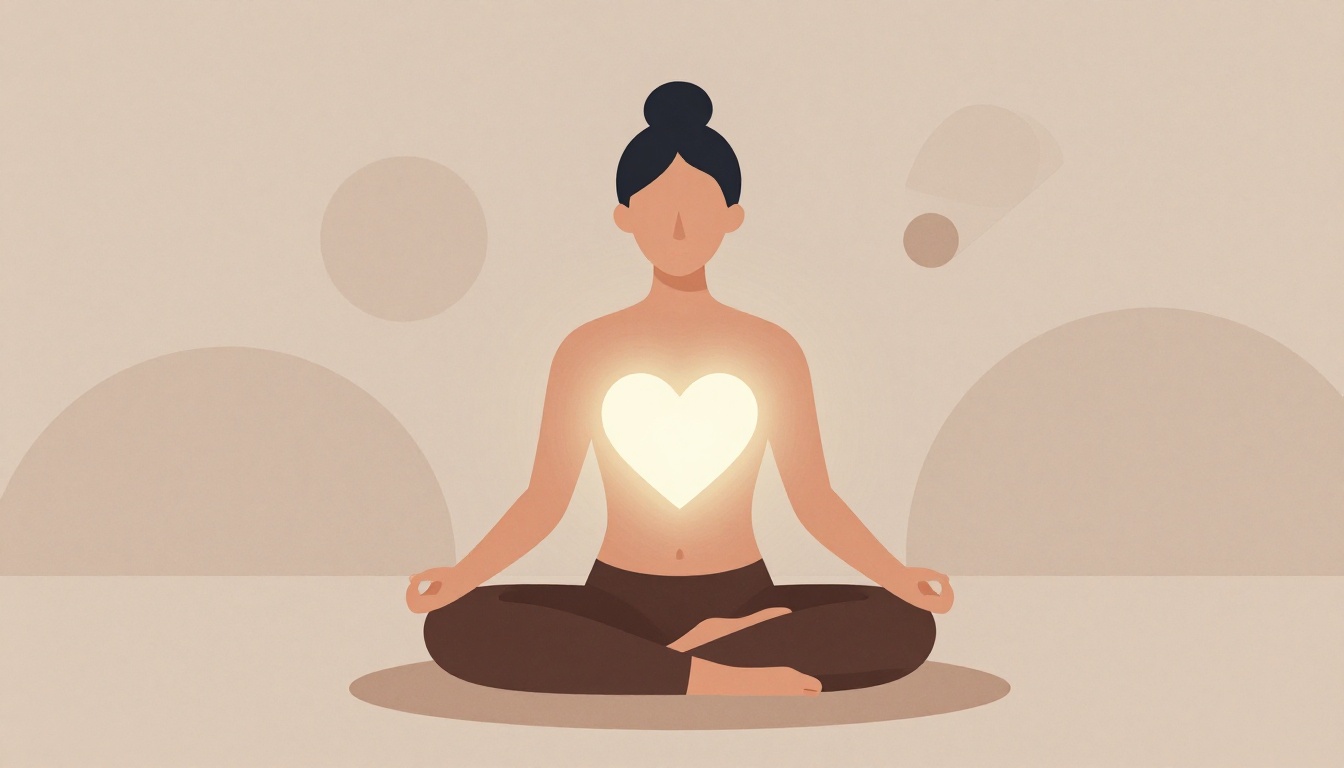
- Sit comfortably. Close your eyes or keep them open, focusing on a non-distracting object. Allow your body to become still.
- Tune into your breath. Notice the sensations of inhaling and exhaling without trying to change your breath. Feel your belly expand and fall.
- Bring yourself to mind. This is the hardest step for many. Picture yourself, or say your name silently. Acknowledge any resistance or discomfort.
- Repeat the phrases. Silently offer: "May I be safe, may I be healthy, may I be happy, may I live with ease." Let these words become your own. If distracting thoughts arise, acknowledge them and return to the phrases.
- Extend to others. After a few minutes, bring to mind someone you care about and repeat the same phrases for them. Then gradually include a neutral person, a difficult person, and finally all beings.
- Close gently. When you're ready, take a few breaths and slowly open your eyes.
Start with 5 minutes a day if 15 feels too long. The key is consistency, not duration. As you practice, you may notice that the intention itself is the practice—not the feeling. Over time, this can quiet your inner critic and increase self-acceptance (PositivePsychology.com).
Integrating LKM with Therapy
Loving-kindness meditation is a powerful complement to trauma-informed therapy, especially for shame and self-criticism. It can be integrated into approaches like Compassion-Focused Therapy, which was originally developed for individuals with a strong disposition for self-criticism and feelings of shame (Harvard Review of Psychiatry). If you're working with a therapist, consider asking how LKM might fit into your treatment plan.
Quiz: Test Your Understanding
Before you go, check your knowledge with this quick quiz based on the research above.
Question: What did a study by Shahar et al. (2014) find about loving-kindness meditation?
- A. It was effective for self-critical individuals in reducing self-criticism and depressive symptoms.
- B. It had no effect on self-criticism.
- C. It increased shame and self-criticism.
Correct answer: A. The study found LKM reduced self-criticism and depressive symptoms in self-critical individuals.
How the Featured Expert Can Help
If you're ready to explore loving-kindness meditation as part of a deeper healing journey, Ben Duffy offers 1:1 psychotherapy, life coaching, and spiritual mentorship that blends Western psychology with Eastern wisdom traditions. As a licensed Colorado psychotherapist, he uses trauma-informed approaches like IFS, gestalt, and somatic therapy to help you achieve freedom, connection, and agency. Visit Ben Duffy | Psychotherapy & Spiritual Liberation to learn more.