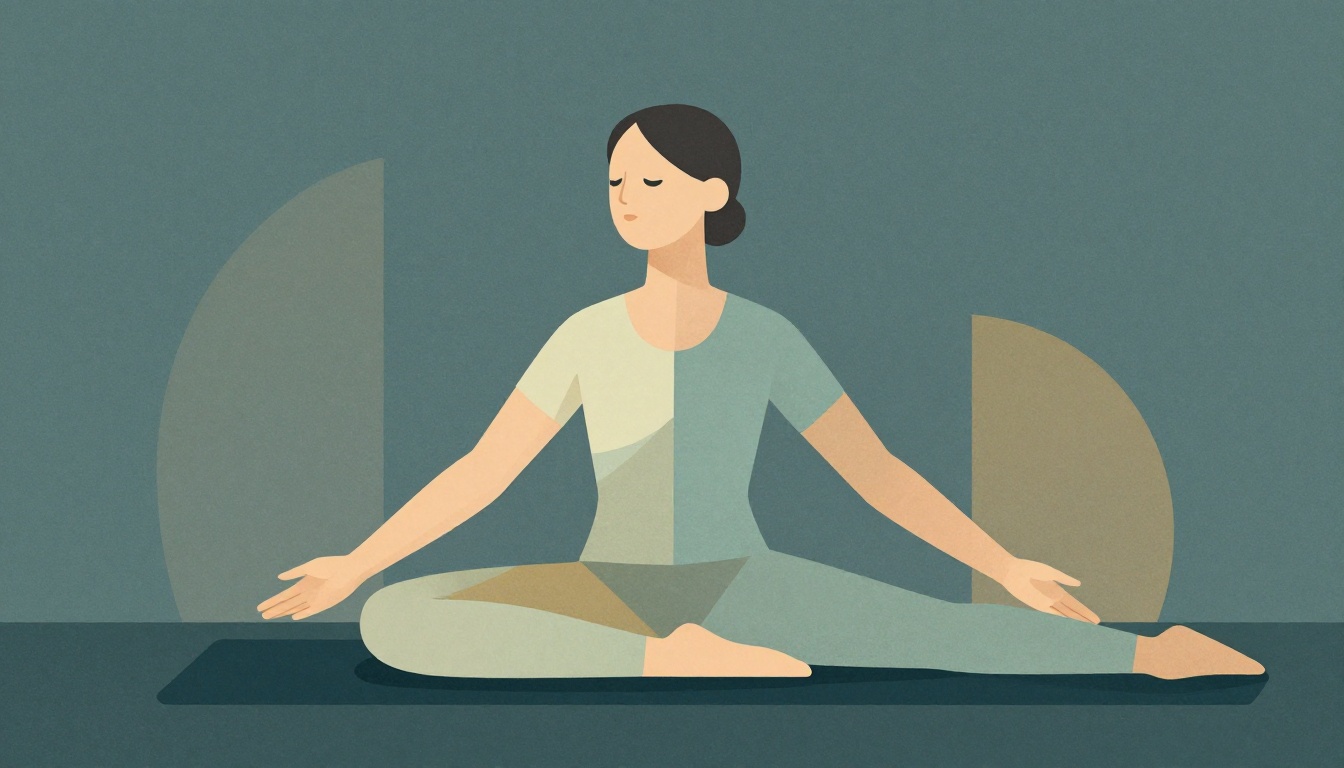
You've heard the phrase "trauma is stored in the hips," and you feel it—tightness, stiffness, or a vague unease that never seems to release no matter how much you stretch. The idea that emotions get trapped in the body is more than metaphor; it's rooted in how your nervous system responds to stress. When a threat triggers your fight-or-flight response, your muscles contract, and the hips—home to the psoas, a deep muscle that connects your spine to your legs—often bear the brunt. If that stress cycle never completes, the tension can become chronic, leaving you feeling physically and emotionally stuck. This guide offers practical, science-informed somatic exercises to help you release that held tension safely and effectively.
Which muscle is often called the "survival muscle" and is key to hip tension?
Select one answer.
Why the hips hold tension
The psoas muscle, often called the "survival muscle," contracts during moments of fear or danger as part of your body's protective response. Chronic activation of this muscle leads to persistent tightness in the hips and pelvis, according to Desta Therapy. This isn't about a literal storage vault; rather, trauma changes how you experience your internal world—a process called interoception—making your body feel less safe, as Matthew Huy explains. The hips are a major stabilizing area, so they often reflect the body's habitual bracing patterns, as noted by Brett Larkin.
How somatic exercises help
Somatic exercises focus on slow, mindful movement and body awareness to release tension and regulate the nervous system. Unlike intense stretching, these practices invite you to notice sensations without forcing change. This approach helps complete the stress cycle that was interrupted during a traumatic event, allowing your body to return to a state of safety. Research on Somatic Experiencing® shows that treating post-traumatic symptoms by changing interoceptive and proprioceptive sensations can be effective, as cited in a 2021 study.
5 somatic exercises to try at home
Start with these gentle movements, holding each for 1–2 minutes and breathing slowly. Always move within your comfort zone—if you feel overwhelmed, stop and ground yourself.
-
Pelvic Tilts: Lie on your back with knees bent, feet flat. Gently tilt your pelvis upward, pressing your lower back into the floor, then release. This mobilizes the lower spine and hips, easing tension.
-
Windshield Wiper Knees: Lie on your back, knees bent, feet flat. Let both knees fall to one side, then the other, like a windshield wiper. This gentle rotation releases the lower back and hips, as recommended by Yoga with Rachel Marie.
-
Butterfly Stretch with Spinal Undulations: Sit with the soles of your feet together, knees out. Gently undulate your spine forward and back, allowing your hips to open naturally. This pose aids in releasing tension in tight hips, according to Aura Institute.
-
Low Lunge with Breath: From a kneeling position, step one foot forward into a lunge. Keep your back knee down and gently sink your hips forward, breathing into any tightness. This stretches the psoas and hip flexors, which are key to the stress response.
-
Reclined Pigeon (Figure-4): Lie on your back, cross one ankle over the opposite knee, and gently pull the bottom leg toward you. This targets the deep hip rotators and is a common pose for releasing stored tension, as noted in Instagram reel from doodledwellness.
Safety and pacing
Releasing trauma from the hips is not a race. Healing is a deeply personal process influenced by your experiences, consistency, and emotional readiness, as Desta Therapy emphasizes. You might feel emotions like sadness or anger during these exercises—that's normal. But if you feel overwhelmed, stop and focus on your breath or a safe place in the room. Trauma-informed therapy creates the necessary safety and trust for deep release, so consider working with a professional if you have a trauma history.
A simple routine to start
- Week 1: Practice pelvic tilts and windshield wipers daily for 5 minutes.
- Week 2: Add butterfly stretch and low lunge, holding each for 2 minutes.
- Week 3: Incorporate reclined pigeon, and continue with all five exercises for 10–15 minutes.
- Always: Breathe slowly, notice sensations, and move only as far as feels safe.
Quiz: Test your knowledge
Which muscle is often called the "survival muscle" and is key to hip tension?
- The psoas muscle
- The gluteus maximus
- The quadriceps
Correct answer: The psoas muscle (index 0).
How the Featured Expert Can Help
Ben Duffy is a licensed Colorado psychotherapist who blends Western psychology with Eastern wisdom traditions, offering 1:1 psychotherapy, life coaching, and spiritual mentorship. He focuses on trauma-informed approaches such as IFS, gestalt, and somatic therapy to help clients achieve freedom, connection, and agency. To explore how somatic work can support your healing, visit Ben Duffy | Psychotherapy & Spiritual Liberation.